


Choosing the Right Size String Instrument
Choosing the right size string instrument for your child can feel daunting, especially if you’re unfamiliar with string instruments. Between different sizing systems, measurements and advice from multiple sources, it’s easy to feel unsure where to start.
At WA Music Co, we’re always happy to help. Visiting our store and having one of our friendly, experienced staff assess the correct size instrument for your child is always an option. There’s no rush — taking the time to size up correctly before purchasing makes a real difference.
How do I choose the right size string instrument for my child?
We often receive questions from parents such as:
-
How do I know which size instrument is best for my child?
-
What measurements do I need to take?
-
If my child is between two sizes, should I choose the smaller or larger option?
-
How will I know when my child has outgrown their instrument?
Choosing the right size string instrument for a young performer is something our team has extensive experience with, and we’re here to help make the process easier.
How do I know when my child needs a bigger size?
Your child’s instrumental tutor will usually be the first to notice when it’s time to move up a size. However, signs may also include your child hunching over the instrument, struggling to reach comfortably, or complaining that intervals feel cramped.
If your child appears to be between two sizes, it’s generally best to choose the smaller option. Instruments that are too large are harder to control and can increase the risk of strain or injury, whereas a slightly smaller instrument is much easier and safer to play.
How long should my child stay on one instrument size?
Instrument sizing is a dynamic process. As a general guide, most children remain on a particular size for around eighteen months to two and a half years. Every child grows at a different pace, so some may move through sizes more quickly, while others remain on the same instrument for longer.
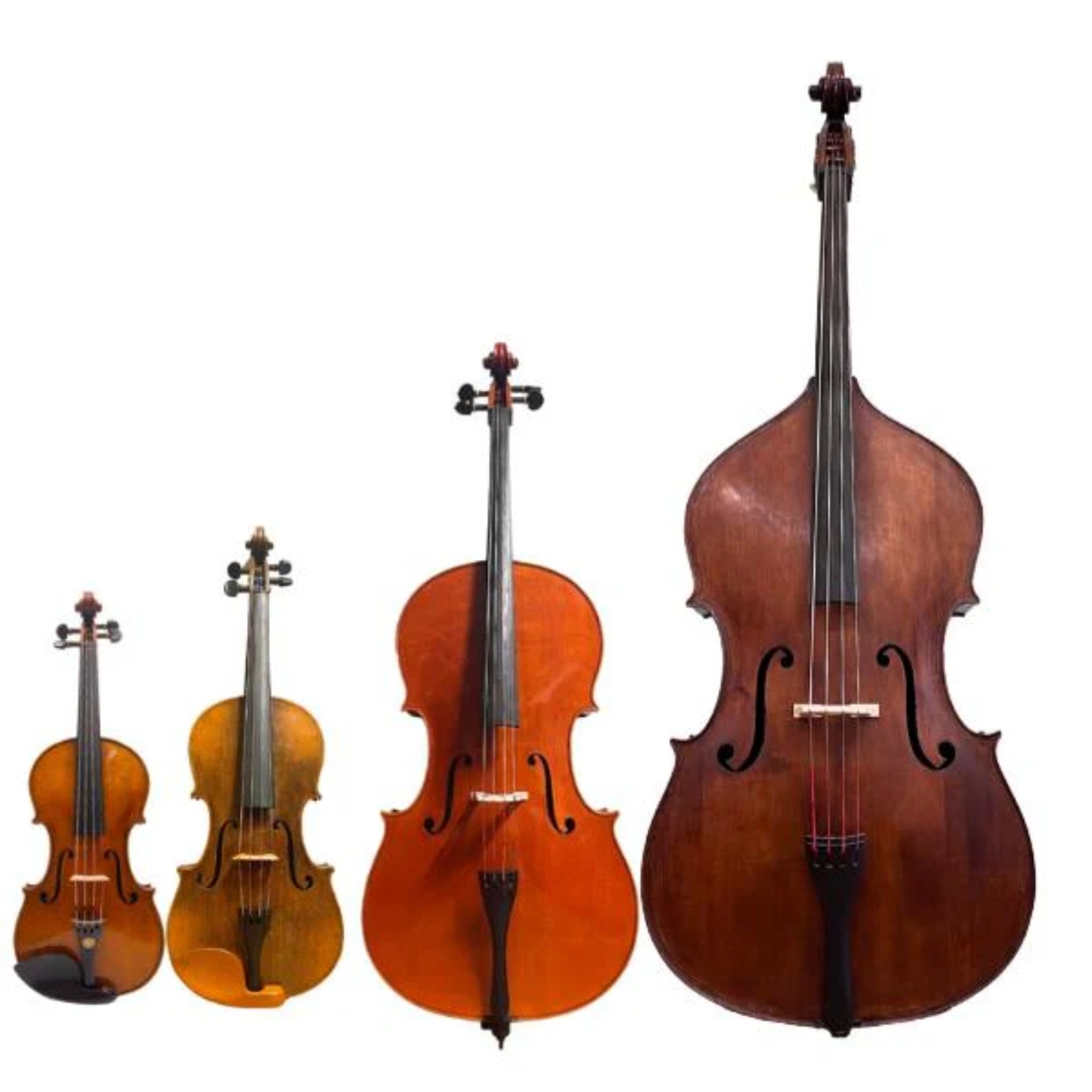
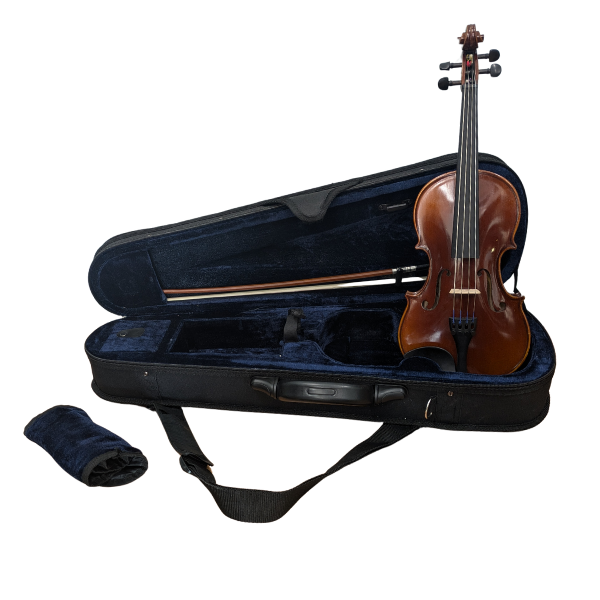
Violin and viola sizing
Violins and violas are sized according to arm length rather than height or hand size. Have your child extend their left arm with the elbow straight and the palm facing upwards, roughly at a 45-degree angle, similar to how the instrument is held.
Measure from the centre of the palm to the base of the neck. This measurement corresponds to the appropriate instrument size. It’s a good idea to take this measurement several times, as some children may slightly bend or hyper-extend their arm without realising.
Compare your measurements with the size chart below to determine the correct size.
Cello sizing
Sizing a child for a cello involves considering height, arm length and finger span. Comparing these measurements with a sizing chart is a helpful starting point.
When seated, a correctly sized cello should rest against the middle of the chest. The lowest tuning peg should sit slightly below the left ear, and the lower corners of the instrument should sit just above the inside of the knees. The player should be able to reach both ends of the fingerboard comfortably.
Double bass sizing
Double bass sizing is generally based on the height of the player. While you may notice that 4/4 basses are sometimes mentioned, a 3/4 double bass is considered the standard size for most adult players, with full-size instruments being relatively uncommon.
A properly sized double bass should have the bridge roughly level with the large knuckles of the player’s right hand when standing, with the nut of the fingerboard sitting around eyebrow height.
Need help choosing the right size?
Our team at WA Music Co is always happy to help size your child for a string instrument. If you have any questions or would like assistance in person, feel free to visit us in store or contact our team.
You can reach us on (08) 9244 9559 or via email at [email protected].